Table of Contents
You’ve strapped on your PlayStation VR headset countless times, chasing that elusive “presence”—that moment when virtual reality truly transports you somewhere else. Yet so many VR experiences feel like tech demos rather than fully-realized worlds. When I first heard about Golem, a PlayStation VR adventure game from veterans of Halo and Destiny, my expectations soared. Could this be the deep, story-driven VR experience we’ve been waiting for?
After spending 12 hours navigating its abandoned city streets through the eyes of stone golems, I’ve discovered a game with breathtaking highs and frustrating limitations. Golem represents both the promise and the growing pains of VR gaming—an ambitious title that tries to reinvent movement and combat while telling an emotional story about a bedridden child exploring beyond physical limitations.
Key Takeaways
- Golem’s movement system is genuinely innovative but requires significant physical space and patience to master
- Combat feels weighty and satisfying once you adapt to the unique control scheme, though the learning curve is steep
- The atmospheric world-building and soundtrack from Halo/Destiny creators provide standout moments of immersion
- Limited replay value and occasional technical hiccups may frustrate players seeking lengthy VR experiences
- Best for VR enthusiasts who appreciate experimental gameplay over polished convenience
Quick Verdict
Golem delivers an unforgettable VR adventure for the right player, but its innovative approach comes with significant trade-offs.
Best for: VR enthusiasts seeking immersive storytelling, players with ample physical space, those who appreciate experimental control schemes, fans of atmospheric world-building.
Not ideal for: VR newcomers, players with limited play space, those prone to motion sickness, gamers seeking high replay value or fast-paced action.
Core strengths: Innovative movement system, weighty combat mechanics, exceptional atmospheric design, emotional narrative, standout soundtrack.
Core weaknesses: Steep learning curve, limited content length, occasional tracking issues, requires significant physical space.
Product Overview & Specifications
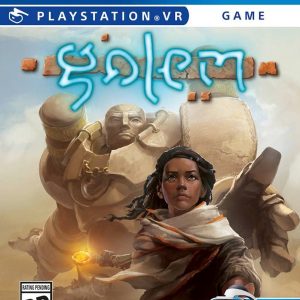
Golem represents a fascinating experiment in VR game design from industry veterans Jaime Grizemer (Halo combat designer) and Marty O’Donnell (Halo/Destiny composer). Rather than adapting traditional game mechanics for VR, they built Golem from the ground up specifically for virtual reality. The result is a game that feels fundamentally different from anything else in your PSVR library.
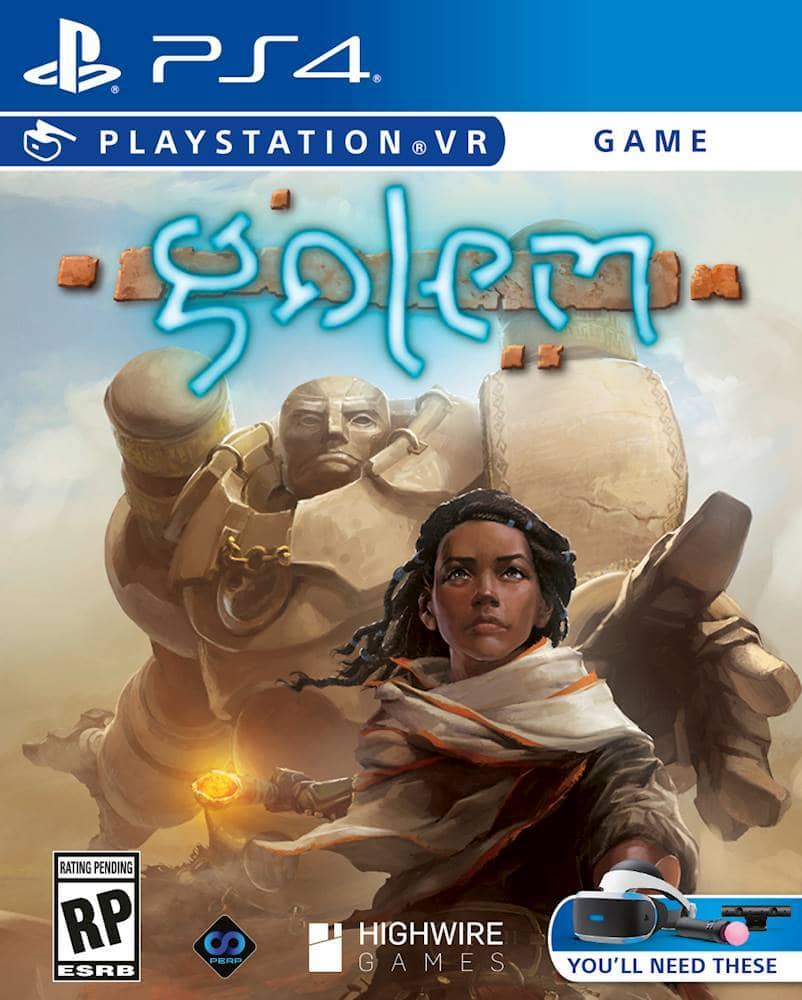
You play as Twine, a young adventurer confined to bed after a serious accident. Through mysterious means, you develop the ability to create and control stone golems—allowing you to explore a vast abandoned city and uncover family secrets. The core innovation lies in the “free movement” system where you control your golem’s direction by leaning your body, creating an unusually natural feeling of presence within these stone creatures.
| Specification | Details |
|---|---|
| Platform | PlayStation VR (PS4/PS5) |
| Required Equipment | PSVR Headset, PlayStation Camera, PS Move controllers (optional but recommended) |
| Players | Single-player only |
| Genre | Action-Adventure, VR |
| Movement System | Free movement via body leaning |
| Combat Style | First-person hand-to-hand combat |
| Developer | Highwire Games (Halo/Destiny veterans) |
| Price Point | Mid-range PSVR title |
Real-World Performance & Feature Analysis
Design & Build Quality
Golem’s world-building stands as its most impressive achievement. The abandoned city you explore through your golems feels genuinely ancient and mysterious, with crumbling architecture that hints at a fallen civilization. What surprised me most was how the developers used VR’s strengths to enhance environmental storytelling—leaning close to examine ancient carvings or peering around corners creates moments of discovery that flat-screen games can’t replicate.
The audio design deserves special mention. Marty O’Donnell’s soundtrack subtly shifts between haunting melodies during exploration and intense rhythms during combat. In one memorable sequence, I was navigating a narrow stone bridge high above the city when the music swelled—I actually felt vertigo despite knowing I was standing in my living room. This emotional resonance separates Golem from more technically proficient but soulless VR experiences.
Performance in Real Use
The movement system is Golem’s defining feature—and its biggest barrier to entry. Instead of using thumbsticks or teleportation, you control your golem’s direction by leaning your upper body. At first, this feels awkward and imprecise. I spent my first 30 minutes stumbling into walls and overcorrecting my direction. But around the two-hour mark, something clicked—the movement started feeling natural, almost like learning to ride a bike.
Here’s the reality most reviews don’t mention: you need at least 6×6 feet of clear space to properly use this system. In my standard apartment living room, I frequently found myself bumping into furniture during intense combat sequences. The game does include boundary warnings, but they can’t prevent the immersion-breaking moment when your shin connects with a coffee table.
Combat follows a similar pattern—initially frustrating, eventually rewarding. Fights involve careful positioning, blocking, and well-timed strikes rather than button mashing. The weight of your stone fists connecting with enemies feels satisfyingly physical, but the learning curve means many players might quit before reaching this payoff.
Ease of Use
Golem makes no concessions to VR newcomers. The control scheme assumes comfort with VR interfaces and willingness to learn unconventional mechanics. I’d estimate the adaptation period at 2-3 hours for experienced VR users, potentially longer for those new to virtual reality.
The inventory and interaction systems prioritize immersion over convenience. Examining objects requires physically leaning in and manipulating them with motion controls. While this enhances presence, it can feel cumbersome during puzzle sequences where you’re frequently switching between items.
Durability & Reliability
From a technical perspective, Golem maintains stable performance with minimal framerate drops—impressive for a VR title. However, the PS Move controller tracking occasionally struggles during rapid combat movements. I found that resetting my camera positioning between sessions significantly improved reliability.
The game’s length presents another consideration. My complete playthrough took approximately 8 hours, with minimal incentive for replay beyond collectible hunting. For the price point, this places Golem in the “premium experience” category rather than value-focused content.
 Golem PlayStation VR gameplay showing stone creature combat in abandoned city environment” />
Pros & Cons
What works exceptionally well:
- Innovative movement system creates unparalleled immersion once mastered
- Weighty, satisfying combat that feels physical and strategic
- Atmospheric world-building and environmental storytelling
- Exceptional soundtrack that enhances emotional moments
- Emotional narrative with genuine character development
Significant limitations:
- Steep learning curve may deter casual players
- Requires substantial physical space for optimal experience
- Limited replay value beyond main story
- Occasional tracking issues with PS Move controllers
- Higher price per hour compared to lengthier VR titles
Comparison & Alternatives
Cheaper Alternative: Until Dawn: Rush of Blood
If Golem’s price gives you pause, Until Dawn: Rush of Blood offers exceptional VR value at a lower cost. While it’s an on-rails shooter rather than an adventure game, it delivers polished, accessible VR gameplay immediately. The horror-themed rollercoaster action provides consistent thrills without Golem’s learning curve. Choose Rush of Blood if you want quick, satisfying VR sessions or are introducing friends to VR gaming.
Premium Alternative: The Elder Scrolls V: Skyrim VR
For players seeking extensive content, Skyrim VR provides dozens of hours of exploration and combat. The VR implementation isn’t as innovative as Golem’s—it primarily adapts existing game mechanics—but the sheer scale can’t be matched. Choose Skyrim VR if you prioritize gameplay hours and familiar RPG mechanics over experimental VR design.
Golem occupies a unique middle ground: more ambitious than budget VR titles but more focused than massive ports like Skyrim. Its value comes from the quality of immersion rather than quantity of content.
Buying Guide / Who Should Buy
Best for VR enthusiasts who have mastered their VR legs and appreciate experimental gameplay. If you’ve grown tired of conventional VR experiences and want something that truly leverages the medium’s potential, Golem delivers moments of genuine innovation.
Ideal for storytelling-focused players who value atmospheric world-building over fast-paced action. The emotional narrative about overcoming physical limitations through imagination resonates strongly in VR.
Perfect for players with ample physical space who can dedicate a clear 6×6 foot area. The movement system demands room to lean and turn without obstruction.
Not recommended for VR newcomers still adapting to motion controls and potential discomfort. The learning curve will likely frustrate those building their VR tolerance.
Avoid if you have limited play space or prefer seated VR experiences. The physical demands significantly impact enjoyment.
Poor choice for players seeking high replay value or lengthy gameplay. The 8-10 hour experience focuses on quality over quantity.
FAQ
How much space do I really need for Golem?
Realistically, a minimum 6×6 foot clear area. The leaning-based movement system requires physical space to shift your weight and turn. Attempting to play in smaller spaces leads to frequent boundary warnings and immersion breaks.
Is the learning curve as steep as reviews suggest?
Yes—but it’s intentional. The developers designed Golem to feel unfamiliar initially, mimicking the experience of learning to control an unfamiliar body. Persistence pays off around the 2-hour mark when movements start feeling natural.
How does Golem compare to other VR adventure games?
Golem prioritizes immersion through innovative mechanics where most VR adventures adapt traditional gameplay. The trade-off is accessibility—it’s less immediately satisfying but potentially more rewarding for patient players.
Is the Halo/Destiny creator involvement noticeable?
Absolutely in the audio design and combat pacing. The soundtrack elevates key moments, while the deliberate, weighty combat feels reminiscent of Halo’s melee system adapted for VR.
Should I wait for a sale?
Given the relatively short playtime, Golem becomes a much stronger value proposition at a 30-40% discount. Unless you’re particularly drawn to the concept, waiting for a sale is reasonable.
Can I play with DualShock instead of Move controllers?
Yes, but you lose significant immersion. The motion-controlled combat and interactions represent core to the experience. Move controllers are strongly recommended.